
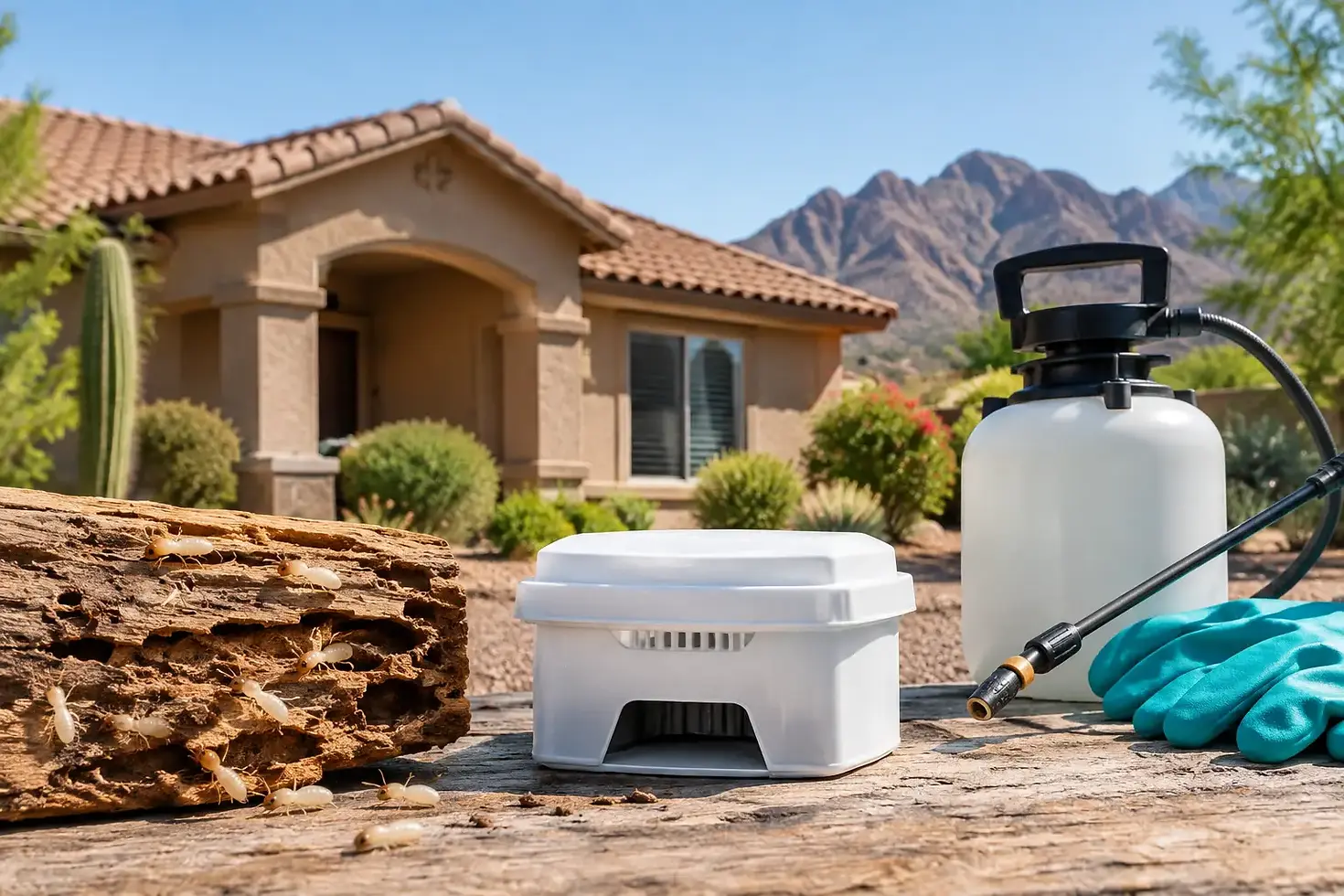
Termite Treatment Comparison for Arizona Homes
Arizona termites do not need a dramatic entrance to cause expensive damage. They often work behind walls, beneath flooring, or through foundation gaps, feeding on wood long before a homeowner sees a discarded wing, mud tube, or soft spot. This termite treatment comparison explains what separates the main professional options, when each makes sense, and why the right choice depends on the construction of your property and the activity found during inspection.
For homeowners and property managers across the Phoenix metro, the goal is not simply to kill the termites seen today. It is to stop the active colony, protect vulnerable areas, and create a practical plan for preventing the next problem.
Termite Treatment Comparison: The Main Options
Most termite recommendations fall into four categories: localized treatment, whole-home liquid soil treatment, bait systems, and fumigation. Each approach has a place, but they do not provide the same coverage, timing, or long-term protection.
Localized no-tent termite treatment
Localized treatment targets a confirmed area of infestation. A licensed technician may treat affected wood directly, inject treatment into wall voids, or address a specific entry point where subterranean termites are active. This is often called a no-tent treatment because it does not require enclosing the entire home for fumigation.
For a contained problem, localized treatment can be a fast, affordable solution with minimal disruption. Homeowners usually do not need to leave for multiple days, remove food, or make extensive preparation arrangements. That matters for busy families, tenants, and businesses that cannot easily shut down.
The trade-off is coverage. A localized treatment is designed for known activity, not necessarily every potential termite entry point around the property. If inspection findings show multiple active areas or conditions that make widespread entry likely, a more comprehensive approach may be the better value.
Liquid soil barrier treatment
Subterranean termites are the primary termite concern in much of Arizona. They live in the soil and travel through hidden tunnels to reach the wood in a structure. A liquid soil treatment creates a treated zone around key foundation areas, plumbing penetrations, expansion joints, and other likely entry points.
This method is often recommended when there is active termite activity, evidence of prior infestation, or a home with conditions that make termite access more likely. Depending on the property, treatment may involve trenching narrow areas around the foundation and treating soil at carefully calculated depths and volumes. Concrete sections may require precise drilling to reach soil below.
A liquid treatment can provide broad protection and immediate control when installed correctly. It is especially useful for homes where termites may be entering from more than one location. The exact scope should be based on an inspection, not a one-size-fits-all price over the phone. Foundation design, patios, garages, block walls, landscaping, and accessible soil all affect the plan.
Termite bait systems
Bait systems use monitored stations placed in the ground around a property. Once termites begin feeding in a station, the bait is designed to be shared within the colony. Over time, this can reduce or eliminate the colony responsible for the activity.
Baits are a good fit for certain homes, particularly where liquid treatment access is limited or where a property owner prefers a monitored prevention program. They can also be part of a long-term termite management strategy for commercial properties and communities with recurring pressure.
The main consideration is timing. Bait systems require regular inspection and monitoring, and they are not always the quickest answer for a home with visible, active damage that needs immediate control. A responsible termite professional will explain whether baiting should stand alone or work alongside another treatment method.
Fumigation and tenting
Fumigation involves enclosing a structure and introducing a fumigant that reaches drywood termites inside inaccessible wood. It can be highly effective for widespread drywood termite infestations, especially when evidence indicates activity in multiple areas of the home.
It also comes with significant preparation and disruption. Residents, pets, plants, and food items may need to be removed or prepared according to strict instructions. The property must remain vacant during the process, which can be inconvenient for homeowners and particularly challenging for occupied rentals or operating businesses.
Fumigation does not create a soil barrier against future subterranean termites. That distinction matters in Arizona. A tented treatment may address drywood termites within the structure, while a separate prevention plan may still be needed for subterranean termite risk. In many situations, no-tent solutions are effective and far more convenient, but widespread drywood activity may warrant a tenting recommendation.
What Determines the Best Termite Treatment?
The best treatment is not automatically the least expensive option or the most extensive one. It is the method that matches the species, infestation location, construction details, and risk level of the property.
A thorough inspection should identify whether the problem involves subterranean or drywood termites, where activity is present, and whether there are signs of old versus current damage. Termite damage can remain visible after a colony has been eliminated, so fresh activity indicators matter. These may include live termites, new mud tubes, damaged wood with active galleries, or frass associated with drywood termites.
Your building type also affects the recommendation. A single-family home with accessible soil around much of the foundation is evaluated differently than a slab home with extensive concrete, a townhome with shared walls, or a commercial building with utility penetrations and landscaping near the structure. Rental homes add another layer because treatment must balance durable protection with tenant access and scheduling.
Arizona conditions play a role as well. Irrigation near the foundation, wood debris, landscaping that touches the structure, plumbing leaks, and cracks around utility lines can all give termites easier access. Treatment works best when it is paired with practical recommendations that reduce those conditions over time.
Cost, Disruption, and Warranty: Compare the Full Value
A true termite treatment comparison should go beyond the initial price. A low upfront cost may be appropriate for a small, isolated issue, but it may not be the best value if it does not address the actual source of termite activity.
Ask what areas are included, what preparation is required, how quickly treatment can be scheduled, and whether the company will return if termites reappear in a covered area. You should also ask whether the plan includes a renewable warranty. A renewable warranty can provide ongoing protection and a clear path for re-treatment when needed, rather than leaving you to start over after a new termite concern appears.
For many Arizona homeowners, the strongest value comes from a customized no-tent treatment backed by a renewable warranty and clear follow-up expectations. That does not mean every home needs the same service. It means the service should be designed around the risk, not around a generic package.
Fast Service Exterminating has served Arizona communities for more than three decades, and our approach starts with understanding what is happening at your property. A licensed technician should be able to explain the findings in plain language, recommend the appropriate level of treatment, and make the process feel manageable.
When to Schedule a Termite Inspection
Do not wait for obvious structural damage. Schedule an inspection if you notice mud tubes along your foundation or walls, wings near windows or doors, bubbling paint, hollow-sounding wood, unexplained cracks, or small piles of pellet-like material near wood surfaces. An inspection is also wise before buying a home, after discovering a plumbing leak, or if neighboring properties have recently had termite activity.
Even if you have had treatment before, termite protection is not a set-it-and-forget-it decision. Changes around the home, warranty renewal dates, moisture conditions, and new construction nearby can all affect termite pressure. Regular professional attention gives you a better chance to catch activity before a small issue becomes a costly repair.
A termite problem deserves a clear answer, not a rushed guess. Choose a treatment plan that fits your property, includes honest expectations, and gives your family or tenants the confidence that help is available when they need it.


Comments